
Introducing a New Way to Listen to the Atlantic on World Whale Day.
Marking World Whale Day with the launch of the ATLAS Project website.
What is underwater radiated noise (URN) and why does it matter?
The ocean is not silent. It is alive with sound from a wide range of sources like waves, storms, animals, and increasingly from human activities like ships and construction. This human-made sound is known as Underwater Radiated Noise (URN).
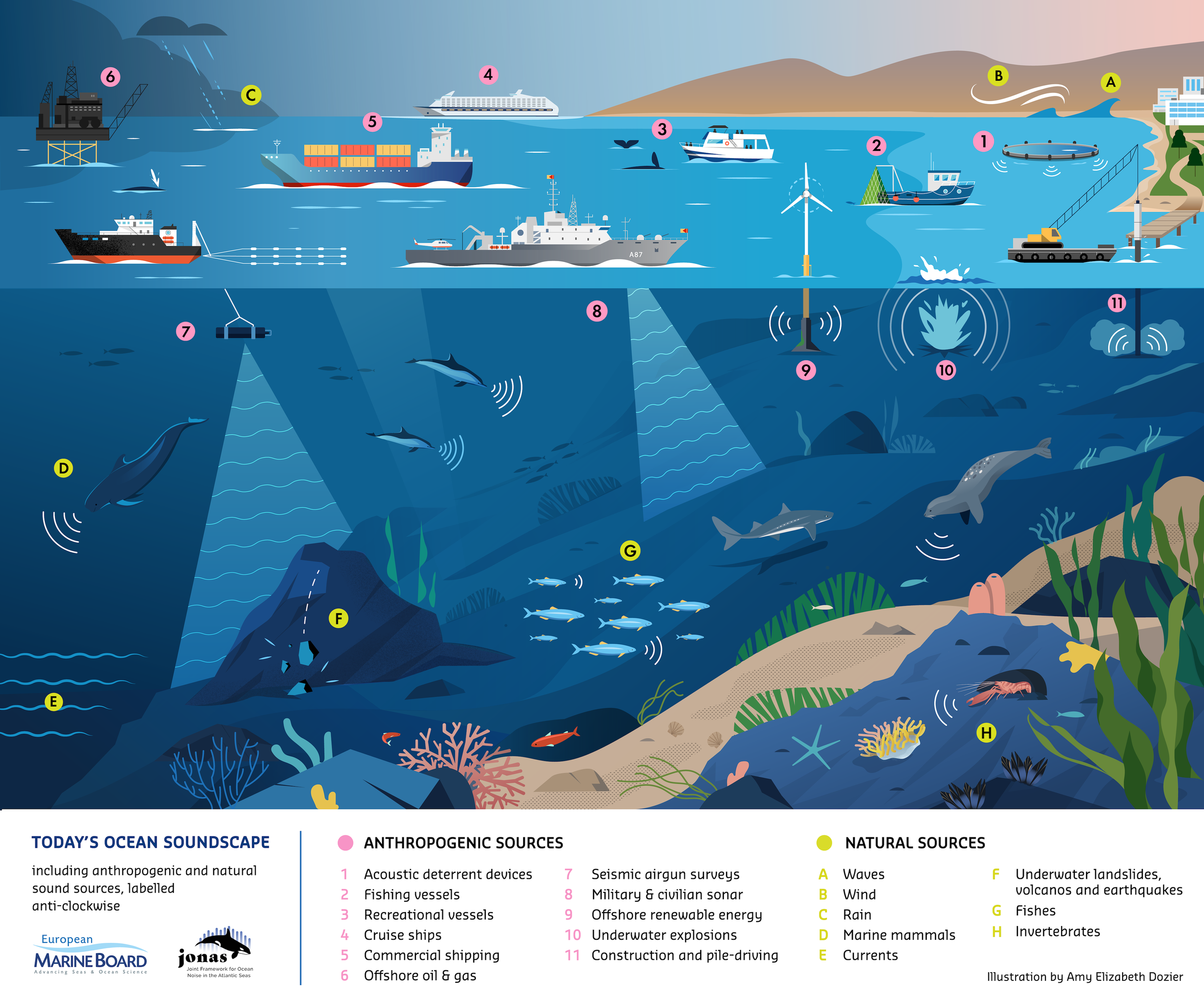
Sound travels four times faster underwater than it does through air, and in the often dark and murky depths of the ocean, this makes a huge difference for the animals that live there.
For whales and dolphins, sound is essential for survival. They use sound to communicate with each other, find food, navigate across vast ocean distances and even detect danger.
Too much noise can confuse, stress, or even harm marine animals. In some cases, it can mask whale calls or drive animals away from important feeding and breeding areas. In worst cases it can damage their hearing temporarily or even permanently. Understanding and reducing harmful ocean noise is now seen as a central part of protecting marine life.
Ship strikes are also a major threat, especially for species like the North Atlantic Right Whale, whose habitats and migration routes overlap with busy shipping lanes.
A global network of subsea telecom cables?
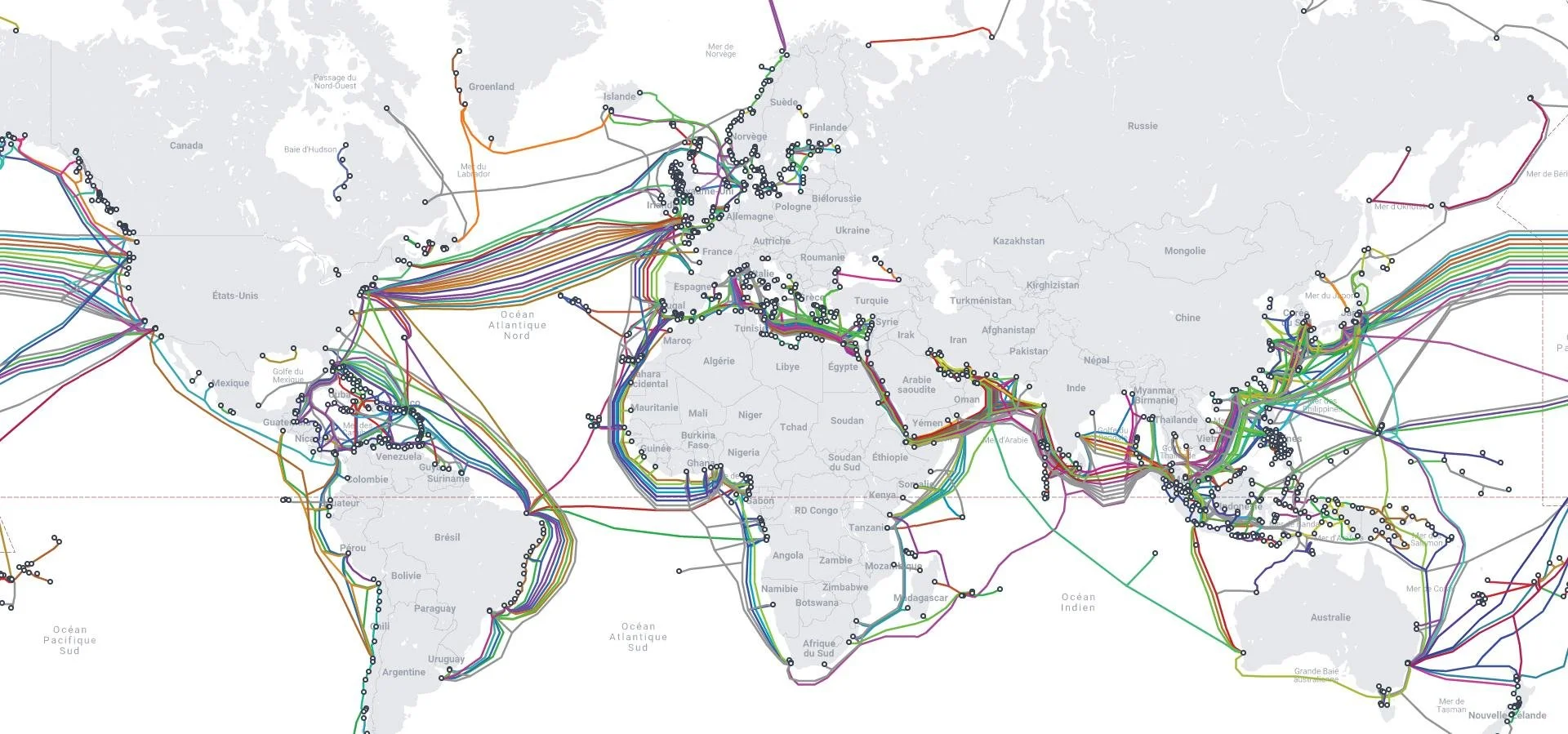
Across the world’s ocean floor lies a huge network of subsea (underwater) fibre-optic cables. These cables carry almost all the world’s internet and international communications, linking continents and countries. The ATLAS project is advancing development of technologies to harness the capacity of these same cables to accurately detect and locate underwater sounds.
Image from: https://www.submarinecablemap.com/
How can cables become acoustic sensors?
ATLAS stands for Atlantic Tracking with Lightwave Acoustic Sensing. It is a European research project that uses a technology called Distributed Acoustic Sensing (DAS). This innovative technology works by sending laser light pulses through the underwater fibre-optic cable. When sound or vibrations (from whales, ships, storms or earthquakes) pass through the ocean and over the cable, they slightly change how the light behaves. When processed and transformed, these tiny changes in the reflected light enable precise measurement of the sound waves that the cable is exposed to.
According to project coordinator Eric Delory, “This means that scientists can hear whale calls, track ship noise, detect earthquakes and monitor ocean activity over tens of kilometres of subsea cables, all without placing any new equipment in the sea, which makes this new way of “listening” to the ocean, very cost-effective and environmentally friendly”.
A European collaboration
ATLAS is coordinated by PLOCAN (Canary Islands) and funded by the Interreg Atlantic Area Programme, supported by the European Union. The project will run until 2028 with a total budget of €3.5 million. Partners include research and infrastructure organisations from: Spain, Ireland, Portugal, France and Norway. All working together to protect the Atlantic through smarter, quieter oceans.

On World Whale Day, the ATLAS project is launching its website where you can learn more about the project and the technology it is developing. You can also sign up to the project’s newsletter to be kept informed about all the project’s news, events and research.
By turning internet cables into ocean sensors, ATLAS is creating a new way to:
Detect marine mammals
Track ship-noise to prevent whale-ship collision
Monitor seismic activity
And build a healthier future for the Atlantic Ocean.